Connection Interface
Simple Modules: 1U
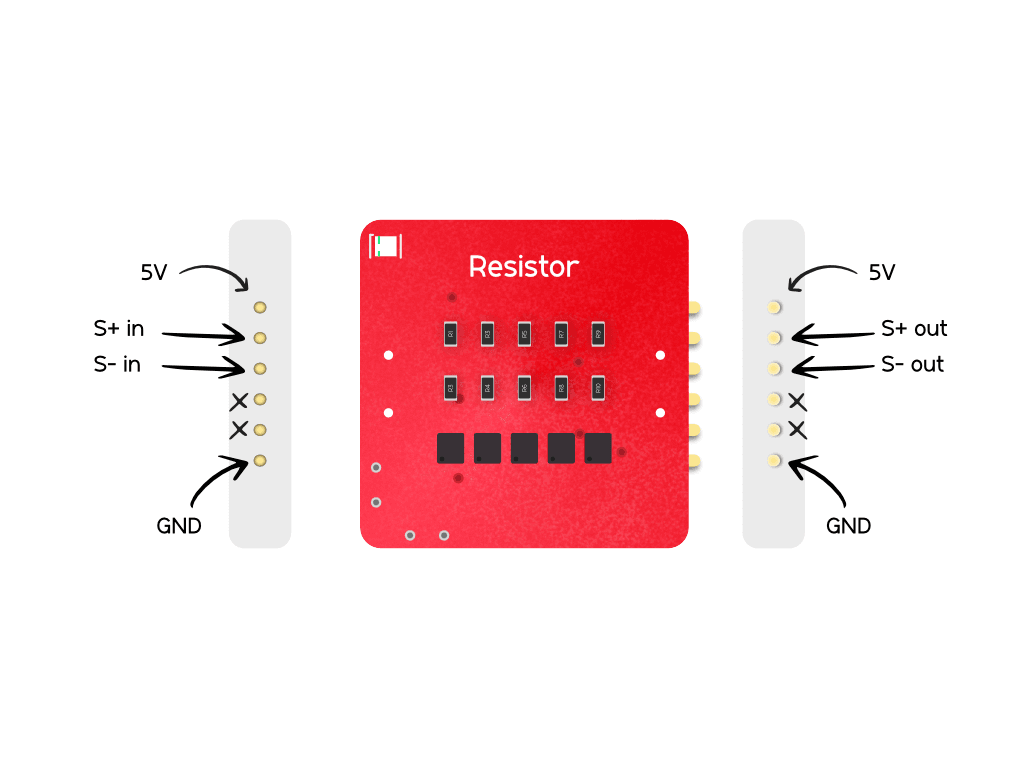
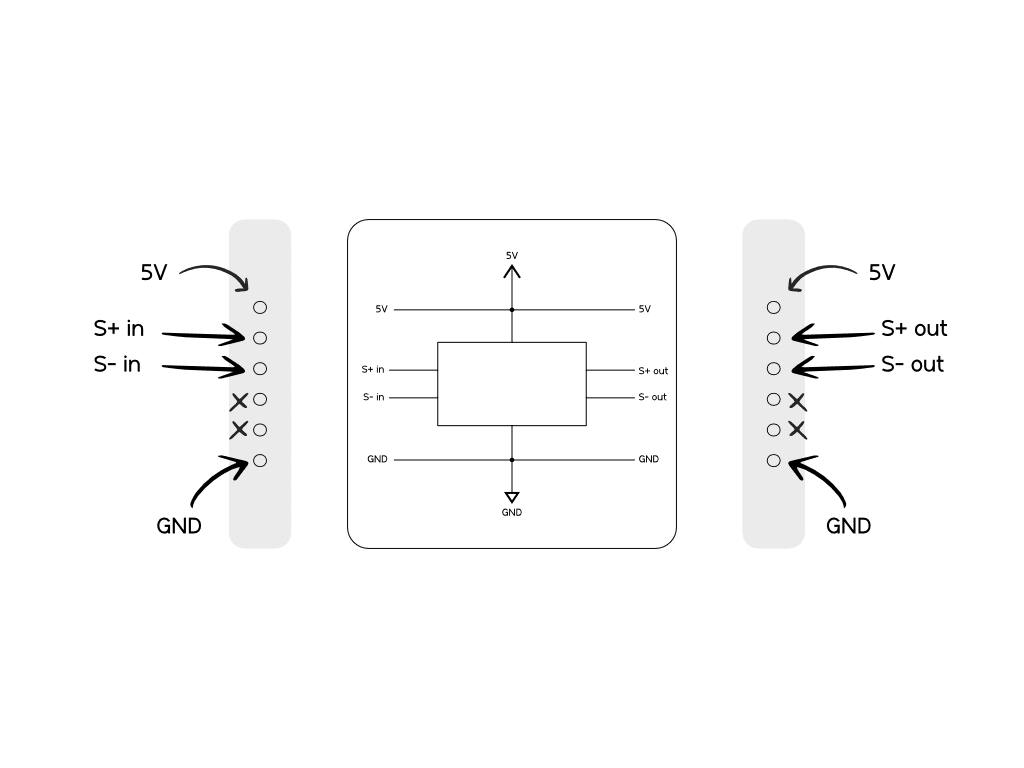
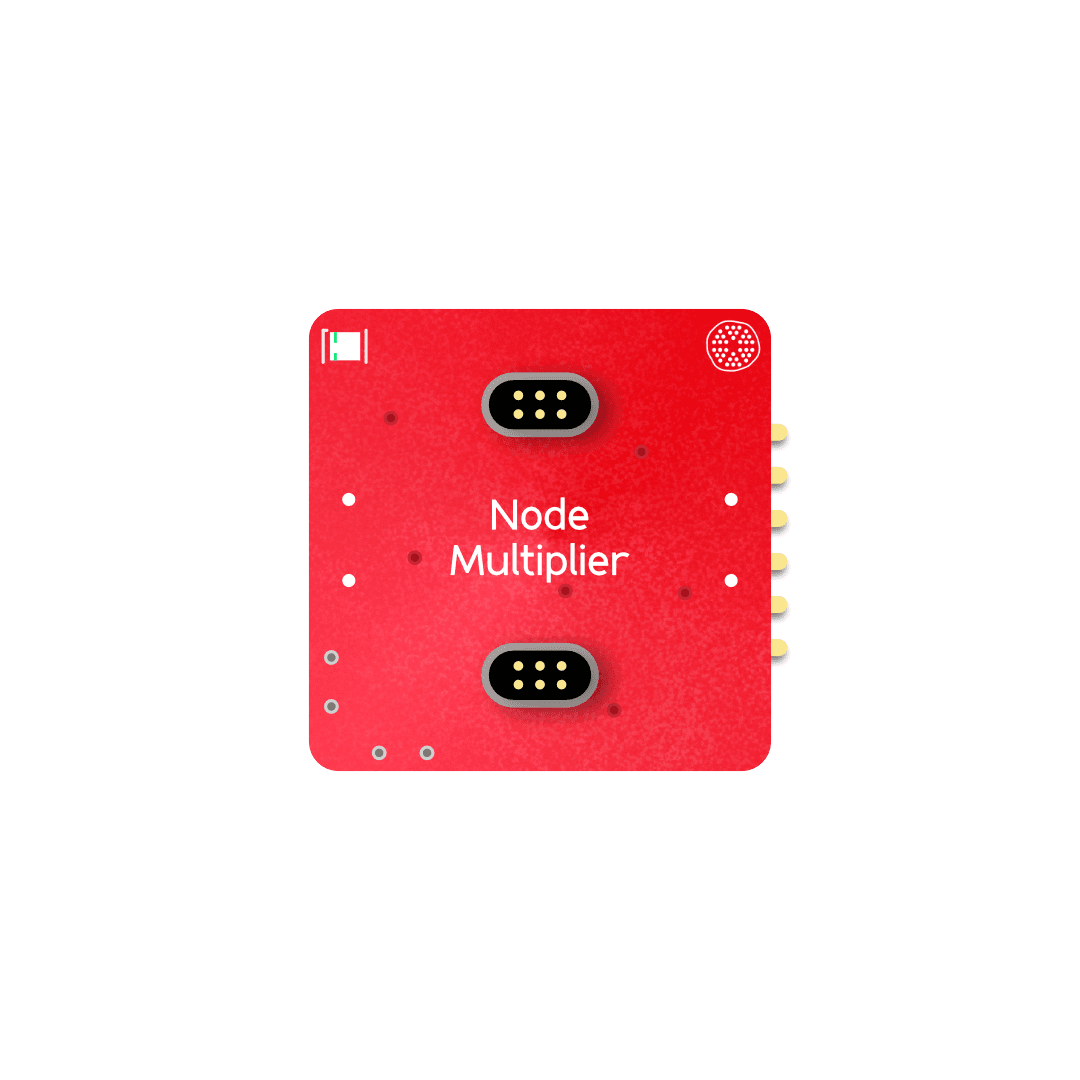
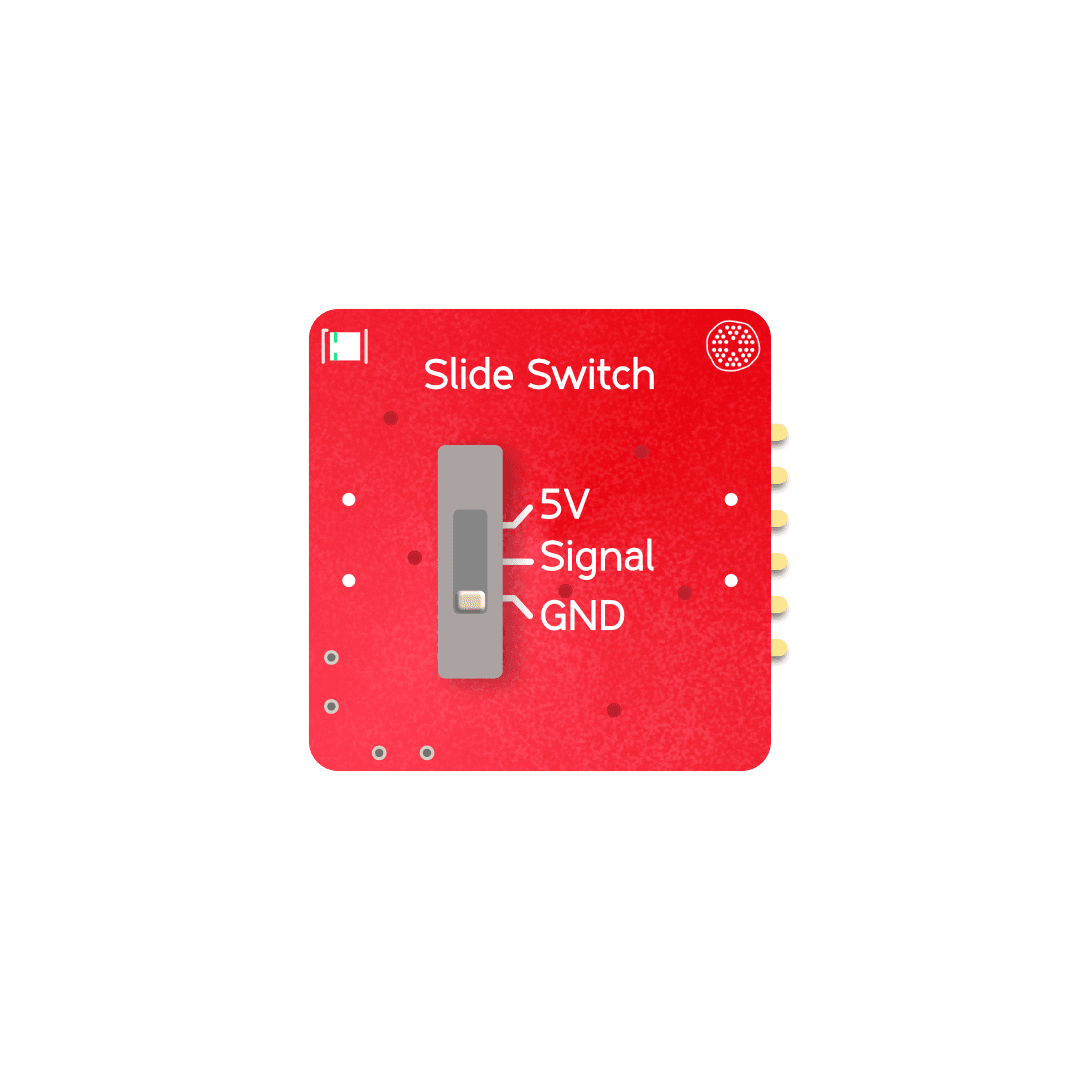
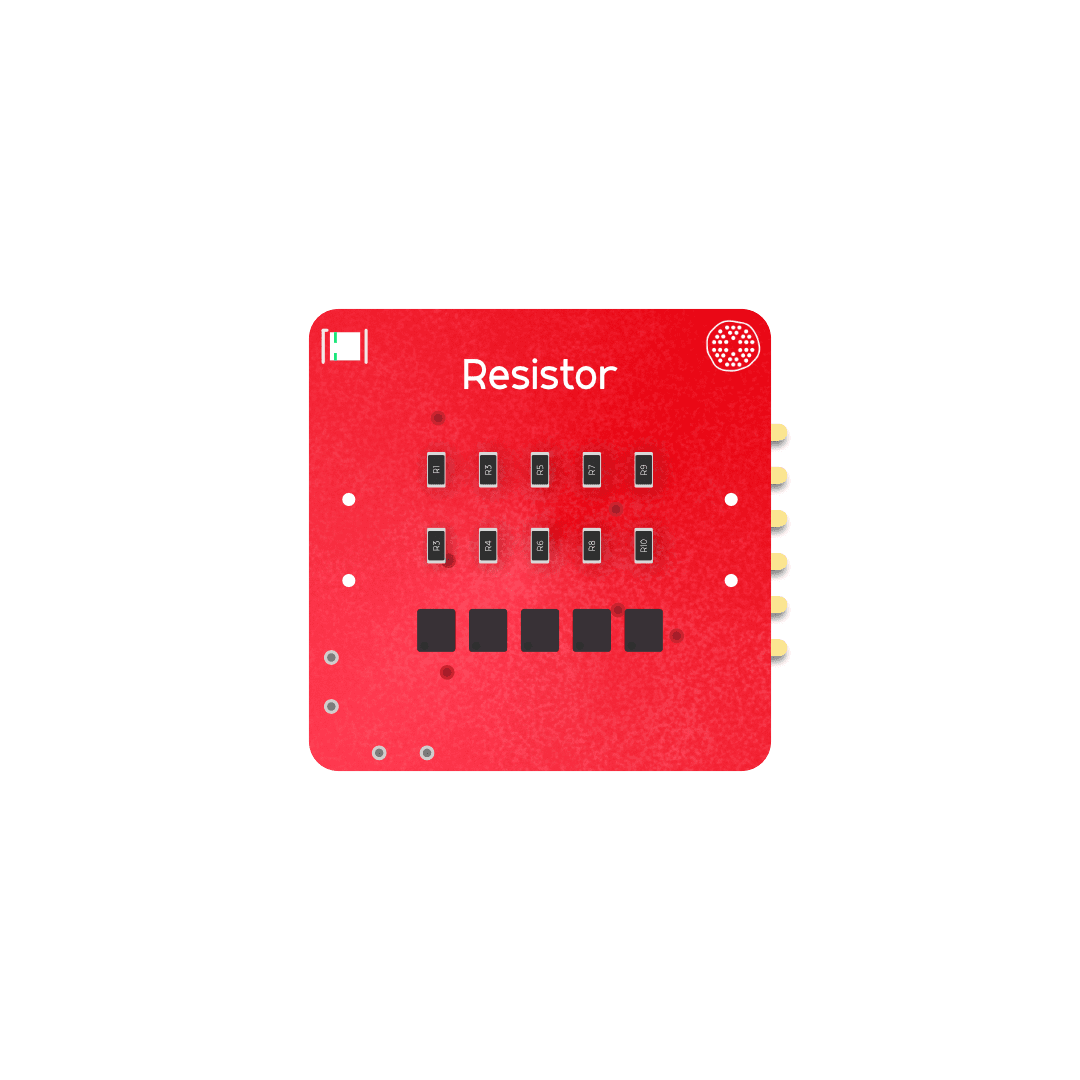
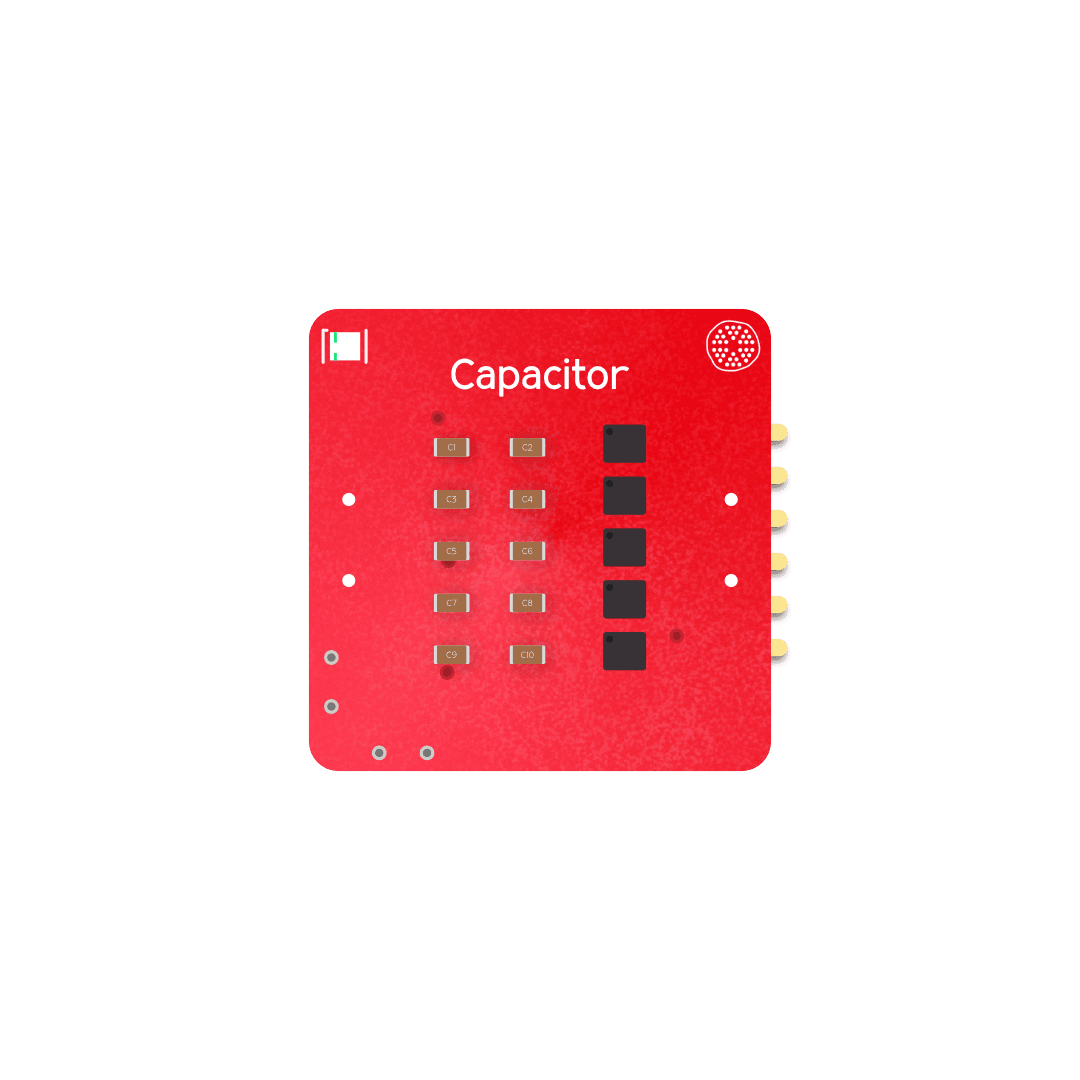
Each module is equipped with a standardized connection interface described below:
1. Power Supply
The electrical bus includes two main wires:
- 5V: Positive supply line providing 5 volts.
- GND: Common ground line shared by all modules
These wires provide power to the components connected to the module.
2. Electrical Inputs
Each module has two inputs dedicated to the signals used by the integrated component:
- S+in : Positive signal input
- S-in : Negative signal input (note: this line is not always used, depending on the component or specific application)
The nature of the signals varies depending on the type of component used in the module (sensor, switch, active element, etc.).
3. Electrical Outputs
Similarly, each module includes two outputs:
- S+out : Positive signal output
- S-out : Negative signal output (note: this line may not be used in some cases, especially for dipole components)
These outputs may, in some cases, represent the terminals of a dipole component (such as a resistor or capacitor), when the distinction between input and output is not meaningful.
4. Communication
All Connect modules integrate two additional wires dedicated to communication::
- These wires are proprietary and ensure data transmission between modules as well as with a computer or other control device.
- These communication lines do not directly participate in the electrical function of the module.
5. Summary of Connection Wires
| | |
|---|
| | Provides the energy required by the modules. |
| | Inputs for electrical signals specific to each module |
| | Outputs to transmit or bias electrical signals. |
| | Shared lines for data transmission between modules. |
This electrical bus simplifies wiring and ensures optimal interoperability between modules, while maintaining flexibility for a wide range of electronic applications..
Double Modules: 2U
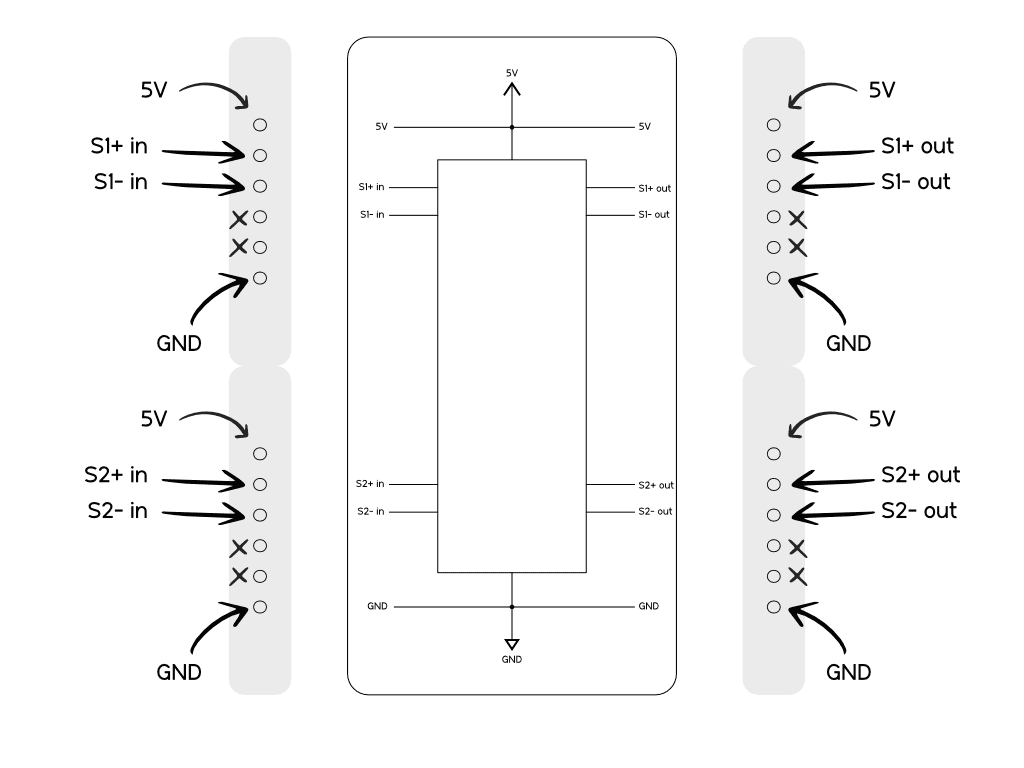
Some Connect modules are designed with a dual interface:
- They include two inputs (S1+in, S1-in and S2+in, S2-in) and two outputs (S1+out, S1-out and S2+out, S2-out).
- The logic is similar to that of simple modules, but with the ability to handle two distinct signals (S1 and S2), both in input and output.
These modules are particularly useful for applications that require simultaneous management of multiple signals or for more complex circuits.